DEMO SITE — a private sandbox seeded with sample data. Please don’t enter real personal, financial, legal, or health information; submissions may be reset at any time.DEMO — sample data. Don’t enter real personal info.
All demos
Photo estimates come back within one business day — send pictures before you bring the car in.
Collision · Paint · Vinyl · PPF

Straight panels,
honest timelines.

An eight-bay shop that photographs its own work and prints its own ranges. Send pictures, get a written band back, and know which stage your car is in every day it is here.

Demo content

Ironline Auto Body & Wrap is a fictional shop. This site exists to demonstrate the KeoCodes Site Engine — the staff, hours, prices, photographs and jobs on it stand in for a real shop's, and no estimate request sent from here reaches anybody. Nothing on this site is a quote.

In the bay

The work, not a stock photo of a handshake

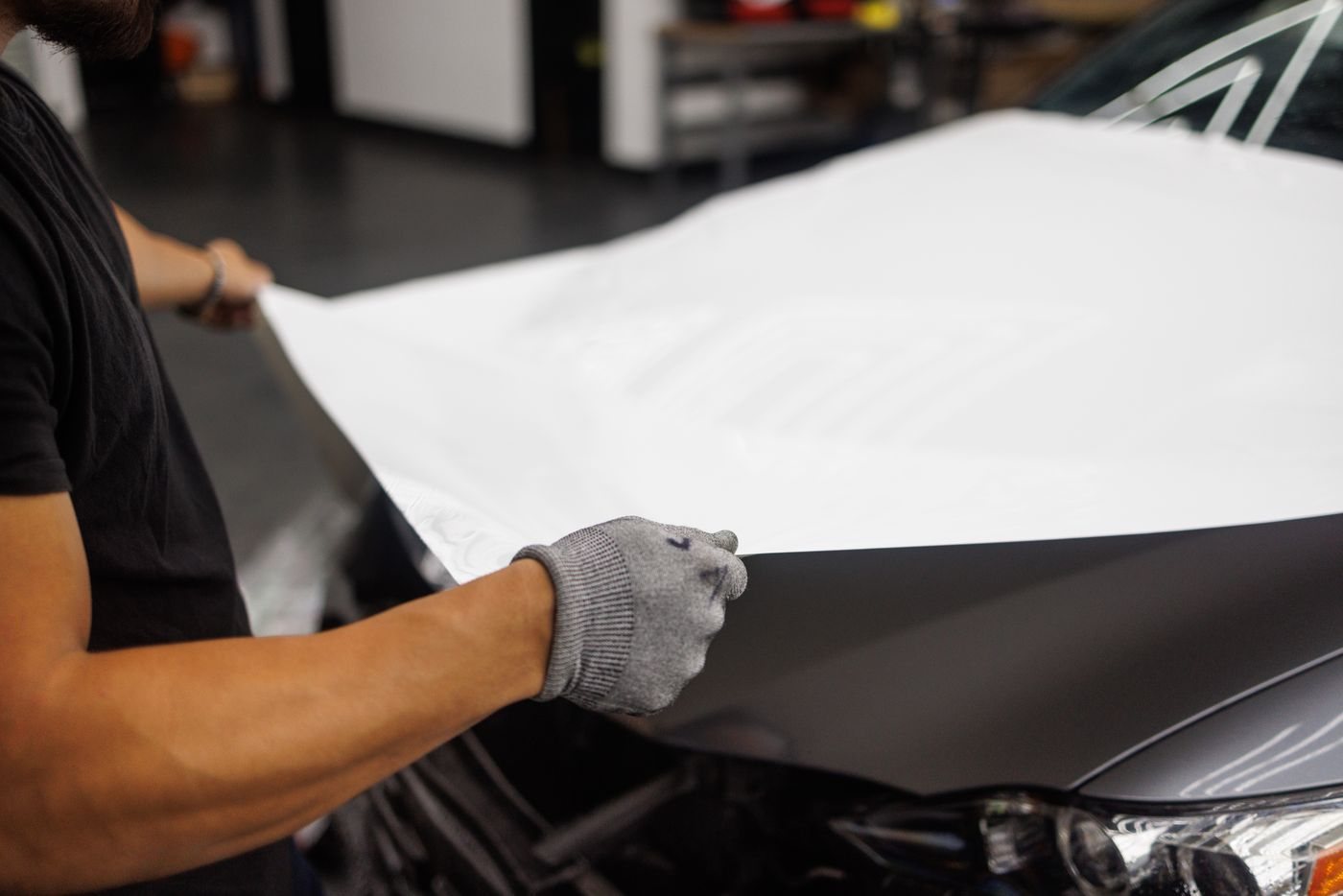
An installer floats a full sheet of white gloss vinyl over the hood of a dark gray car in the bay. Handles, badges and lights come off first, so the edges tuck under the panel instead of sitting on top of it.
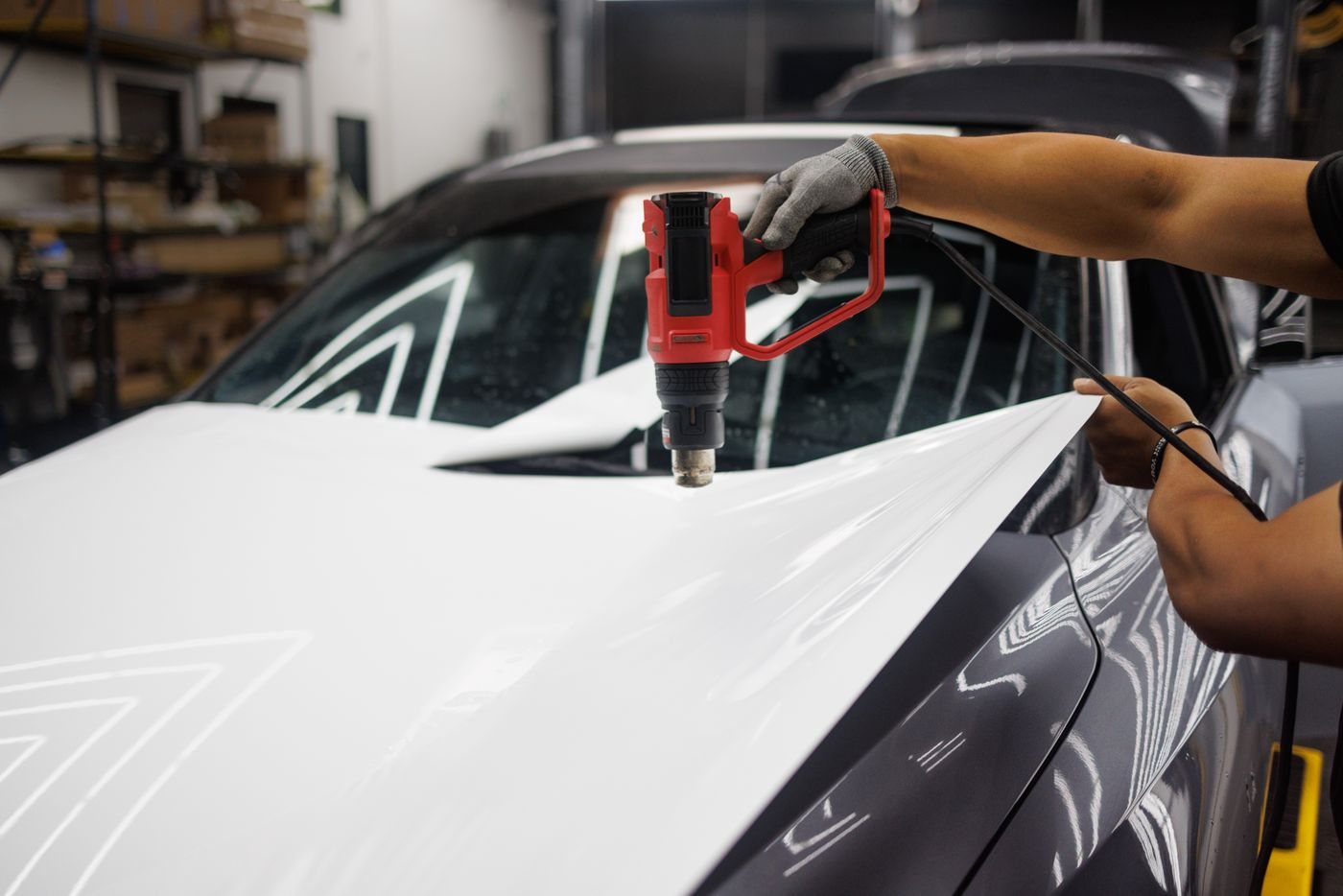
A gloved hand runs a heat gun across white film on a hood while the other hand keeps tension on the sheet. Heat and a steady pull are what decide whether an edge is still down in two summers.
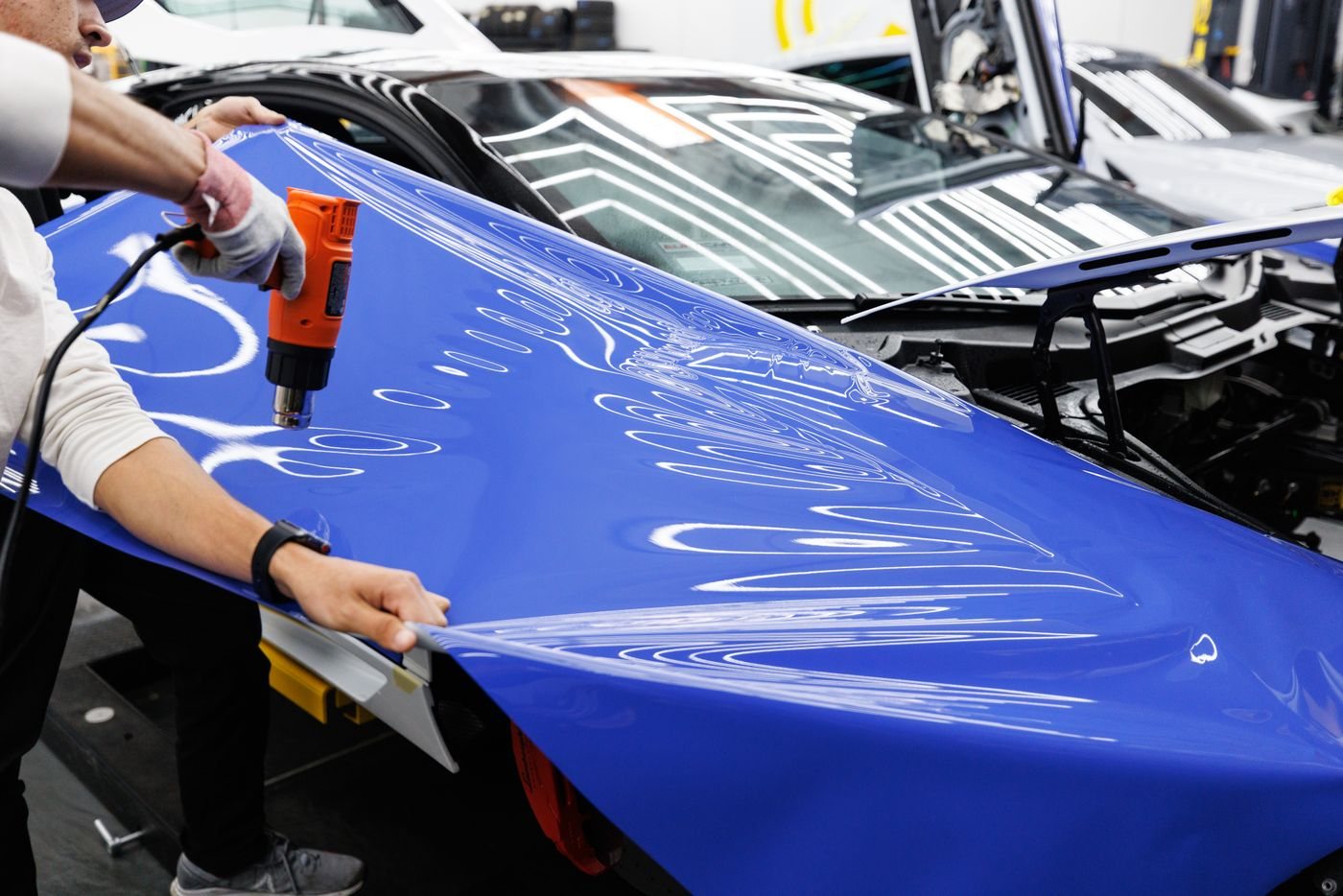
Gloss blue film going down over a front fender, heat gun in one hand and a squeegee in the other. The paint underneath is untouched, which is the whole point of vinyl over a respray.
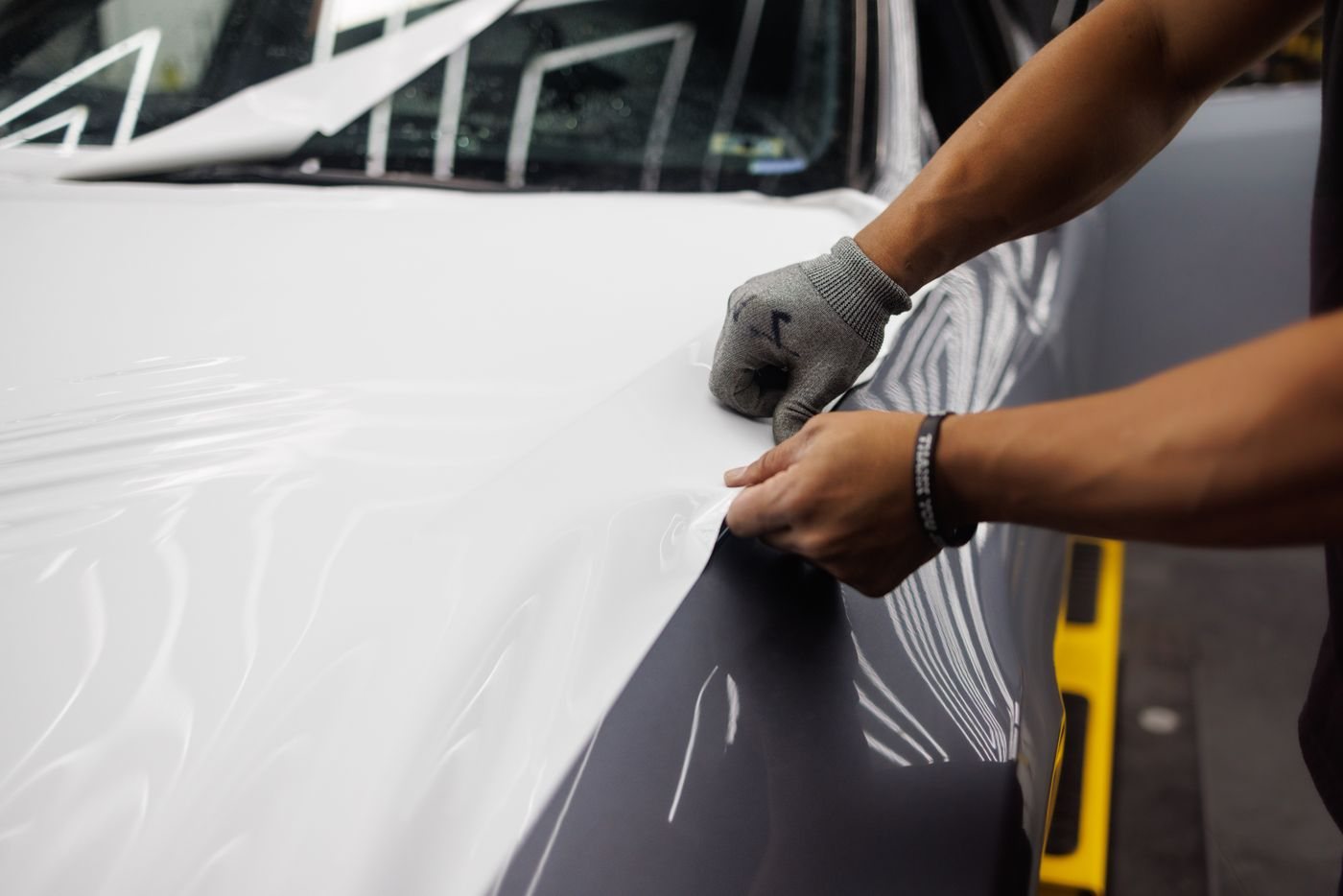
Two hands folding white film around the edge of a hood and bonding it to the back of the panel. Every seam and return is inspected under the light before a car leaves the bay, because edges are where a bad wrap shows first.

Example ranges, in public

What common jobs run

Bumper respray

from $520 scuffed cover, off the car
  • Sand, prime, seal and refinish
  • Blended into the adjacent panels where the color needs it
  • Usually 2 to 3 days in the shop
  • Cracks and tears are repaired first, and quoted separately
  • A torn cover past repair becomes a replacement
See the full list

Panel repair and blend

from $780 one door or fender
  • Metalwork, filler where it is needed, then refinish
  • Color blended into the panels either side
  • Usually 3 to 5 days, longer if a part is on order
  • A dent with no paint damage may be cheaper as paintless removal
  • Creases, edges and body lines add time and cost
See the full list

Full vinyl wrap

from $3,400 color change, cast vinyl
  • Sedan from $3,400, large SUV or truck from $5,200
  • Panels come off — handles, lights, badges — so edges tuck
  • 3 to 4 days in the bay after prep
  • The paint underneath has to be sound; we inspect before we book
  • Removal later runs $600 to $1,400
Book a consultation

About these ranges

These are example ranges for a fictional demo shop. A range is not a quote. What a repair actually costs depends on the panel, the paint, what is behind the plastic, and what the parts cost the week we order them — which is why a firm number needs the car in front of us, and sometimes needs the cover off before we can commit to it. If you are going through an insurer, what they choose to pay is between you and them; we will write you an honest estimate either way and we will not tell you a number on their behalf.

See the full list

Where your car is

Six stages, named out loud

1

Teardown and assessment

The damaged area comes apart so we can see what the impact actually did. Most of what a photo cannot show turns up here: a bent bracket, a cracked absorber, a rail that has moved. This is also where a supplement gets written, and where we call you if the job has changed.

2

Parts

We order what teardown proved we need. This is the stage that slips most often and it is almost never our doing — a back-ordered headlight can add a week on its own. If a part goes long, you hear which part and what the new date looks like.

3

Bodywork

Pulling, straightening, panel replacement, filler where a panel needs it, and block sanding until the shape is right under a straightedge. On a structural job the car goes on the bench and gets measured before and after.

4

Paint

Prime, seal, color, clear, bake. Before any of it, we spray a test card and hold it against the panel in daylight, because a paint code alone does not match a car that has been in the sun for ten years. Silvers, pearls and tri-coats take the longest to get right.

5

Reassembly

Everything that came off goes back on: trim, lights, sensors, badges, clips. Gaps get set against the panels either side. Anything with a camera or radar behind it gets checked and, where the manufacturer calls for it, recalibrated.

6

Quality check and wash

Two sets of eyes under the light booth, doors and hood opened and closed, a test drive if the car was drivable, then a wash. If we find something at this stage, the car does not go out — we would rather call you than hand you a job you have to bring back.

How we work

The parts people worry about

A photo estimate, in writing

Send four or five pictures and a sentence about what happened. You get a written range back, usually within one business day, along with what we would need to see in person before that range becomes a number.

Supplements are a phone call, not a surprise

A supplement is an addition to the original estimate, written when teardown shows damage the outside of the car was hiding. It is normal on collision work. What is not normal is finding out about it on the final bill, so nothing gets added until we have called you and you have said yes in writing.

Color is matched on the panel, not on a screen

We spray a test card in the mixed color and hold it against your car in daylight before anything is sprayed on the vehicle. On faded silver, pearl or a tri-coat we blend into the neighboring panels so the eye never finds an edge.

A date we will update rather than defend

You get a target date at drop-off and a stage you can check any day. When a stage slips we tell you which one and why. A shop that never changes its estimate is either lucky or not looking.

From the Shop

What we've been writing

Read all posts →

Care Guides

Look after the work

Browse all guides →

Where we are, and when

The shop

1420 Foundry Street, Bay 4, Northgate
The long gray building with the roll-up doors, set back behind the fence. Come in the door marked Front Counter.

Six customer spaces in the lot; the three by the doors are bay aprons, so please leave those clear. There is a key drop box beside the front door for after hours.

An invented address for a fictional shop — nobody can actually drive there.

Hours

Front counter — Mon to Fri, 7:30 am – 5:30 pm
Saturday — 8:00 am – 12:00 pm, drop-off and pickup only
Sunday — closed

Walk-in estimates — Mon to Fri, 8:00 am – 4:00 pm. No appointment, fifteen minutes, in daylight.

Insurance work, loaners, the warranty on paint and wrap, and what happens to a car left overnight are all set out on Visit the Shop.

Start with photos

Send pictures. Get a range.

Tell us the car and what happened, then reply to the confirmation email with four or five pictures. We send back a written range and tell you what we would need to see in person before it becomes a number.

Get an Estimate Contact the Shop